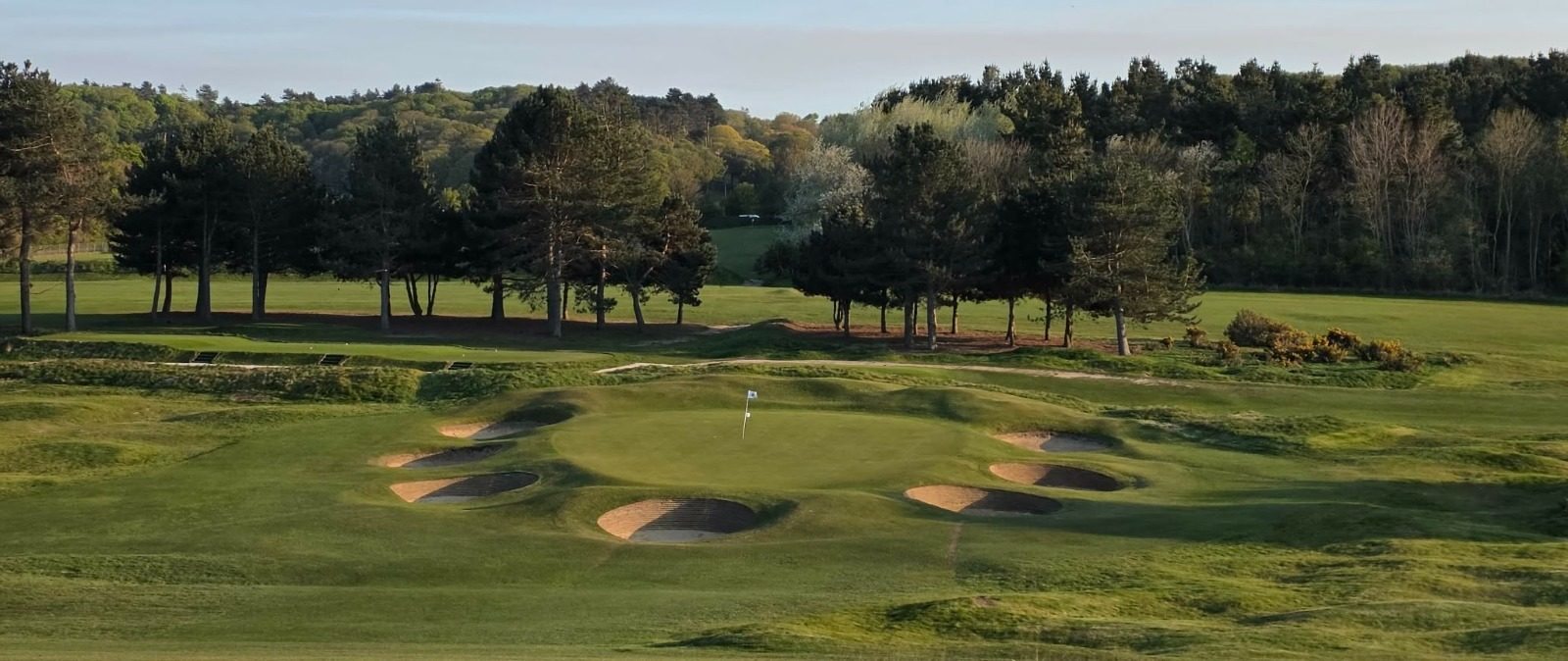
Links Golf · England
Links Golf · England
Ask most international golfers to name the great links circuits of the British Isles and you will hear the same answers: the Ayrshire coast, County Down, the Algarve of Portugal's Atlantic shore. England's east coast rarely features in that conversation. It should.
Stretching from the Lincolnshire coast down through Norfolk and into Suffolk, England's eastern seaboard holds a collection of links and clifftop courses that, taken together, represent one of the most rewarding golf journeys available anywhere in the game. They are less famous than their Scottish counterparts — which means they are less crowded, more accessible, and considerably better value. The golf, on its best days, is equally good.
This is the circuit we build our itineraries around. Here is the case for it.
Links golf in the west of the British Isles — Turnberry, Royal County Down, Ballybunion — is shaped by Atlantic weather. The winds are predominantly from the west and south-west, the rain arrives in squalls off the open ocean, and the courses are built to withstand it. The golf is dramatic, exposed, and often brutal.
England's east coast faces the North Sea. The conditions here have their own distinct character: the wind is drier and colder, often arriving from the north or east, and the light — particularly on clear spring and autumn days — has a quality that is different from anywhere on the western coast. The coastline is lower and flatter, with great expanses of marsh and reed bed behind the dunes. The courses sit in this landscape rather than fighting it.
The turf, too, is different. East coast links tend to play firmer and faster than their Atlantic counterparts. The ball runs along the ground, bump-and-run approaches are not just viable but often correct, and the putting surfaces are quicker than most visitors expect. It rewards a different kind of golf — inventive, ground-level, patient.
"The east coast plays a different game to the west. Lower, quieter, more unforgiving in its own way. Learn to read the wind and the turf here and you will be a better golfer everywhere."
The Norfolk and Suffolk section of the east coast circuit — the area we know best — contains six courses that any serious visiting golfer should know about.
The highest clifftop course on England's east coast. Established 1888, royal patronage granted before the end of the century. Views that stop conversations. A proper test in any wind.
The finest traditional links in Norfolk. Host to multiple major amateur championships. Long, demanding, beautifully routed through the dunes with the Wash beyond. Consistently ranked among England's top 20.
The most extraordinary access in English golf — across a tidal causeway, accessible only at low tide. The course beyond it is one of the finest in the British Isles. Plan around the tides.
Perched between the cliff and the town, Sheringham is a shorter but technically demanding course with some of the most character of any club on the Norfolk coast. The views from the upper holes are exceptional.
The heathland transition — where the links coast gives way to the pine and heather of Suffolk. A beautifully maintained inland course that provides the perfect contrast to a links-heavy week.
Nine holes. Bernard Darwin called it "the sacred nine." Consistently ranked in the Top 100 of Britain and Ireland. A pilgrimage for every serious golfer — and one of the most distinctive finishes to any East Anglia golf trip.
The practical geography of the east coast circuit is straightforward. Most visiting golfers fly into London (Heathrow, Gatwick or Stansted) or Norwich, and the north Norfolk coast is two to two-and-a-half hours from central London by road. The courses are clustered closely enough that you can play two in a day if tee times align — though we generally recommend one course per day to do justice to each.
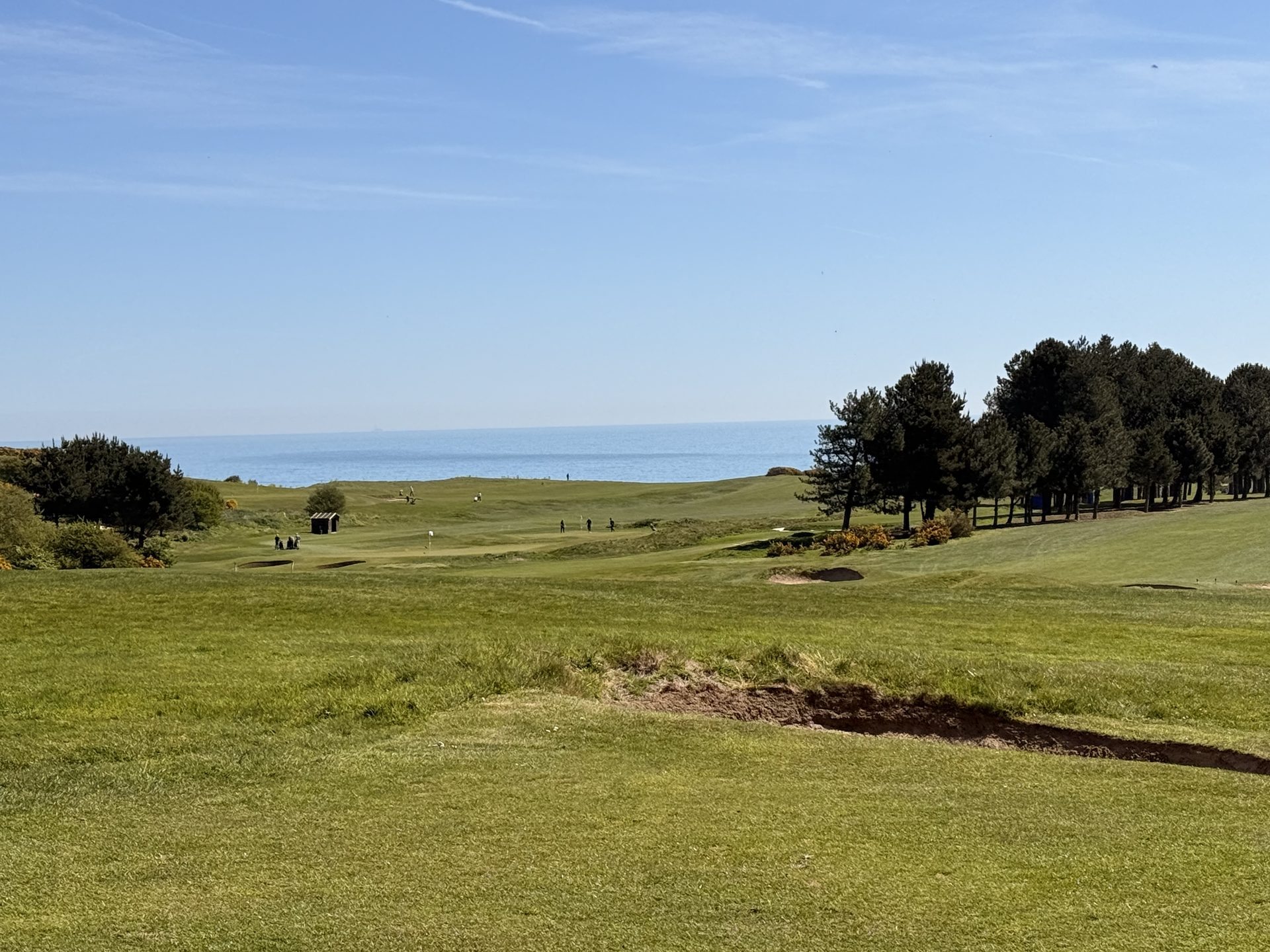
A five-day circuit might look like this: arrive Sunday evening, play Royal Cromer Monday and Sheringham Tuesday on the eastern end of the coast, drive west to play Hunstanton Wednesday and Royal West Norfolk Thursday, then close the trip with Royal Worlington in Suffolk on Friday before heading south. That is five rounds, five genuinely different courses, and a week that will make Scotland feel considerably less indispensable than it did before.
Accommodation on the north Norfolk coast ranges from country house hotels and converted farmhouses to village pubs with rooms that feel unchanged since the 1950s. We have built relationships with the properties that work best for golfers — the right combination of location, character and a kitchen that operates at hours that suit a post-round appetite.
The honest argument for the east coast circuit is this: you will play courses of genuine quality, at green fees that are a fraction of equivalent Scottish clubs, with tee times that can be arranged with a reasonable lead time rather than a two-year wait. The hospitality is warm and unstuffy. The countryside between the courses — the salt marshes at Brancaster, the flint villages of the north Norfolk coast, the big open skies that artists have been coming here to paint for two centuries — is as good as England gets.
It is, in short, a golf trip that tends to produce converts. People who come for a week to tick a couple of courses off a list frequently come back for longer.
We put together the tee times, the transfers, the accommodation and the logistics. You bring the game. Tell us how many days you have and we'll design the itinerary.
Start planning